
The third and final phase of our 2012 Asia trip was Bhutan. We started with a couple days in Thimphu, Bhutan’s capital and largest city, toured by car for several days in the countryside, and finished at Paro, one of the larger towns and the site of the spectacular “Tiger’s Nest” monastery.
Photo gallery
The complete photo gallery for our visit to Bhutan is here: 2012 Asia part 3 – Bhutan.
Slower and calmer
Bhutan felt very different from India and Nepal. Part of this is simply population density: Bhutan’s population per square kilometer is like Colorado’s, where Nepal is like Delaware, and India is like Rhode Island. Everything is slower, quieter, more modest.
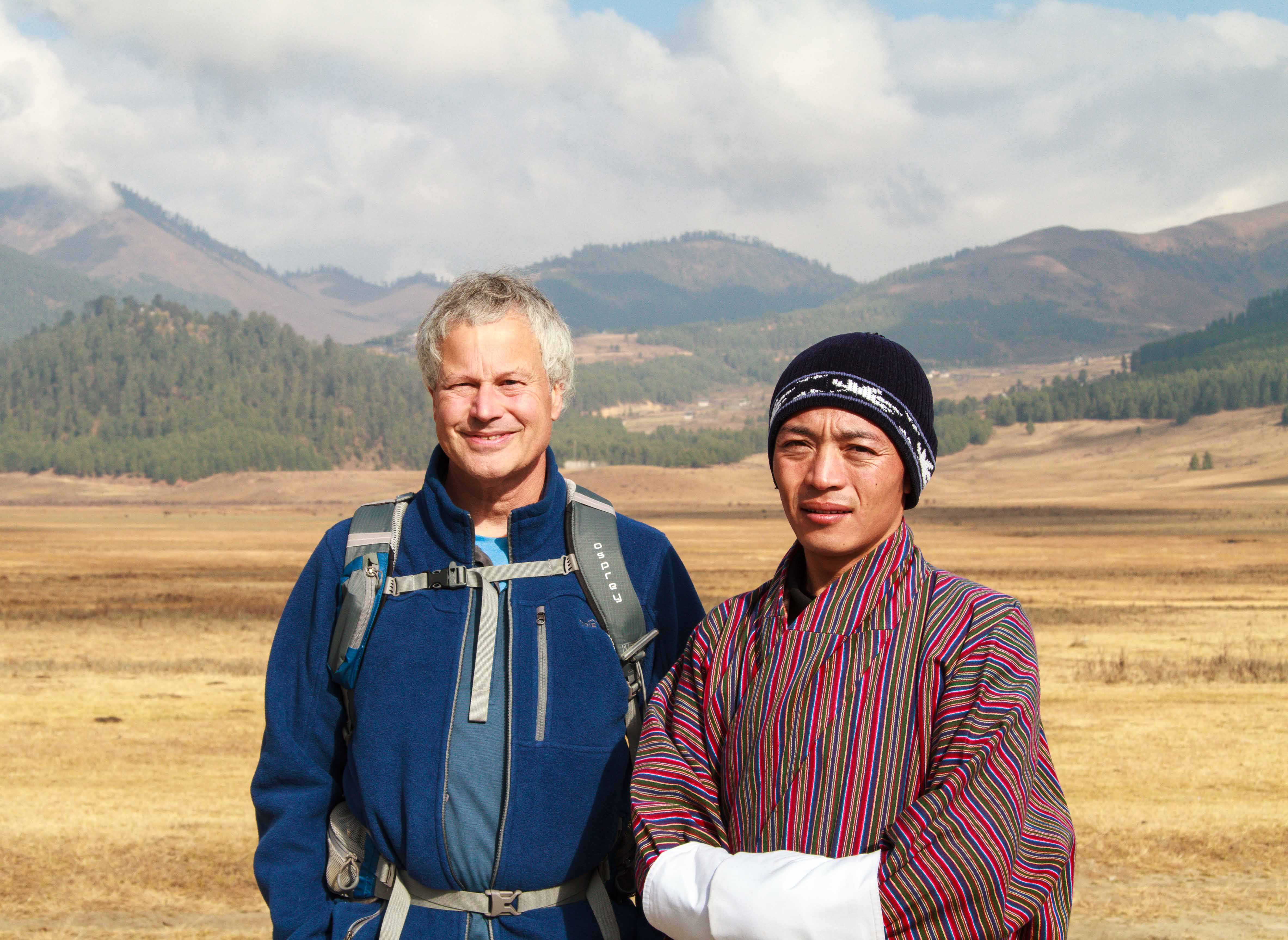
One day in downtown Thimphu, as we walked away from the car and some of our stuff, Robin asked whether the car was locked – knowing that it had not been. Our driver went back to take care of it, of course, but as he did so, he and the guide exchanged slight smiles. We suspect suppressed eyerolls and an unspoken, “Oh definitely. Let me go back and *lock the car*”, as if the idea of needing a lock here were quite amusing.
We had heard about the Gross National Happiness doctrine introduced in the 70s by then-King Jigme Singye Wangchuck. It’s probably safe to assume that reality will fall short of any ideal such as “national happiness”, but it seemed to us that this concept does play an actual role in today’s Bhutan. For example, our guide spoke of GNH impact being used as a screener for development projects, the way environmental impact statements are in the United States. Maybe the social contract is more harmonious here.
That said, it’s not “happiness” as in “happy-go-lucky”. Bhutan seems to be a nation of rules, though – as far as we could see from our tourists’ perspective – not necessarily oppressive ones.
Buddhism
Buddhism is everywhere in Bhutan.
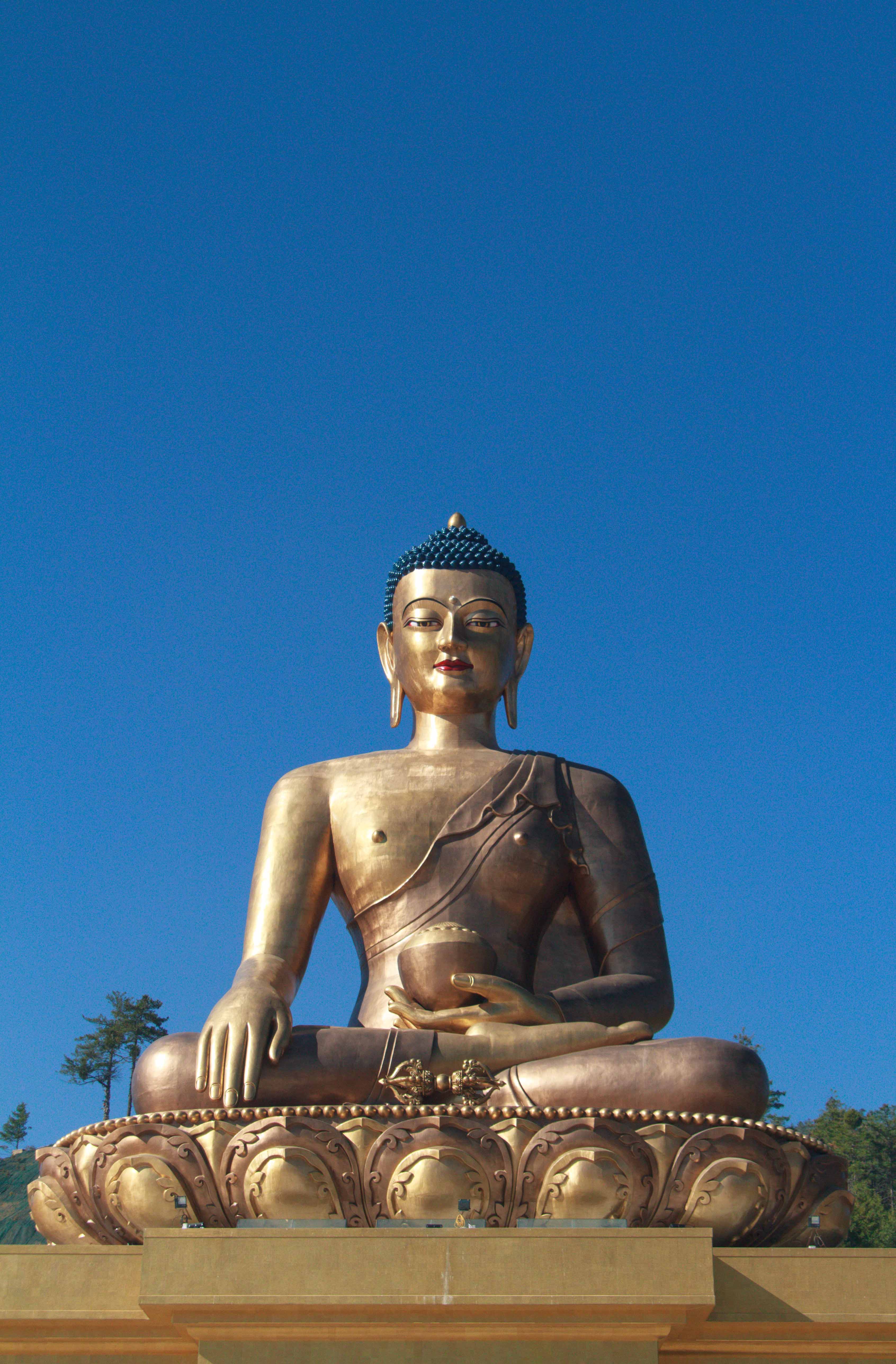
We saw monasteries, temples, stupas, and prayer flags everywhere we went, and we learned a lot about Buddhism and Bhutan’s Buddhist history from Sangay, our guide. The bhavacakra, or “Wheel of Life” depicts the three poisons, karma, the six realms of samsara, the twelve links of origination, and much more. As an illustration of samsara, the 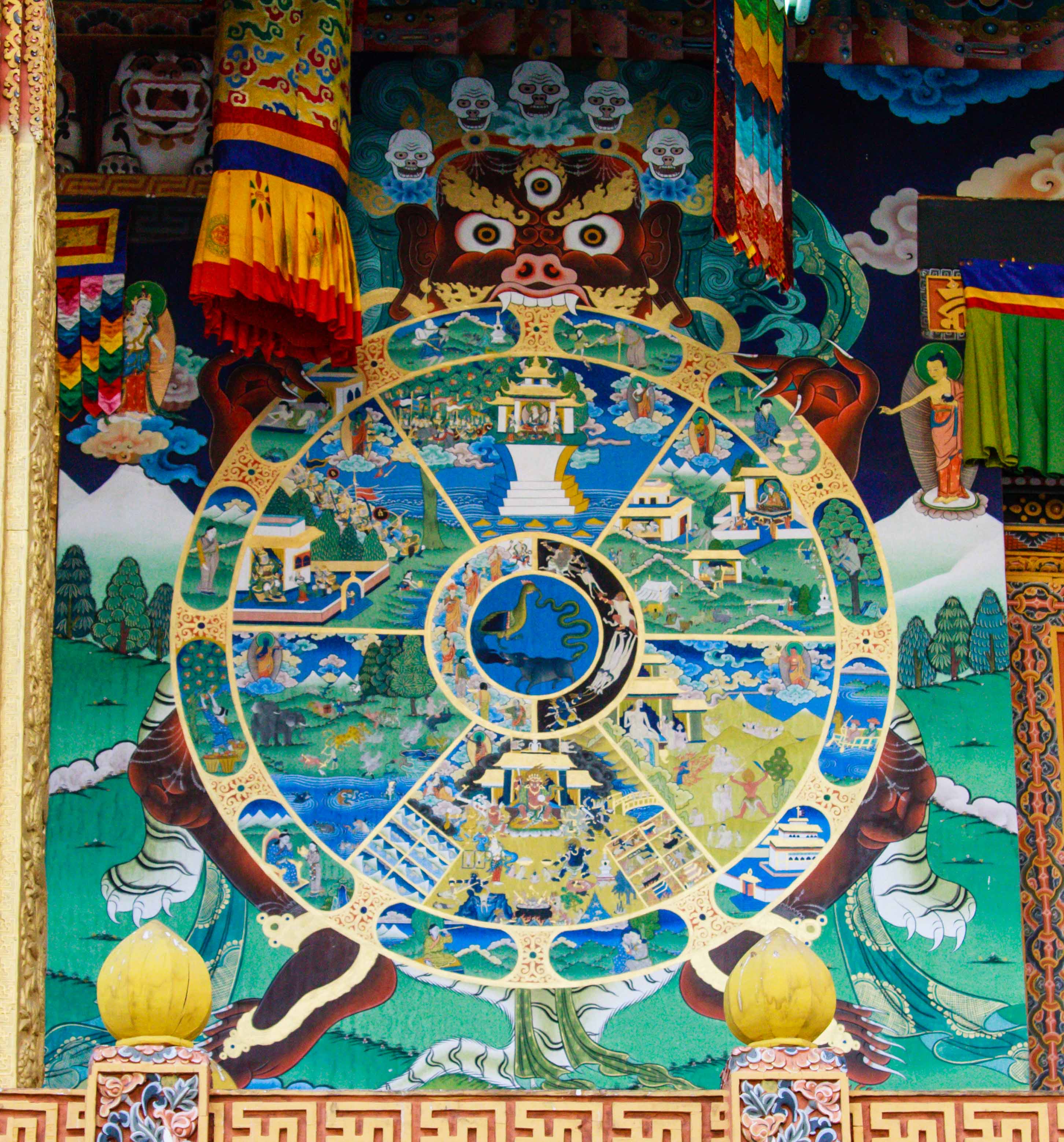 bhavacakra can be used as a framework for explaining many of the most important Buddhist teachings. (Wikipedia has an excellent article on the bhavacakra that goes into detail on much of this.)
Even Bhutanese political and military history are expressed in Buddhist terms. The founder of modern Bhutan, Ngawang Namgyal, is described first and foremost as a Rinpoche, meaning essentially: a guru. This is not untrue, but it’s not the whole truth. He was also a conqueror, a politician, and a ruler.
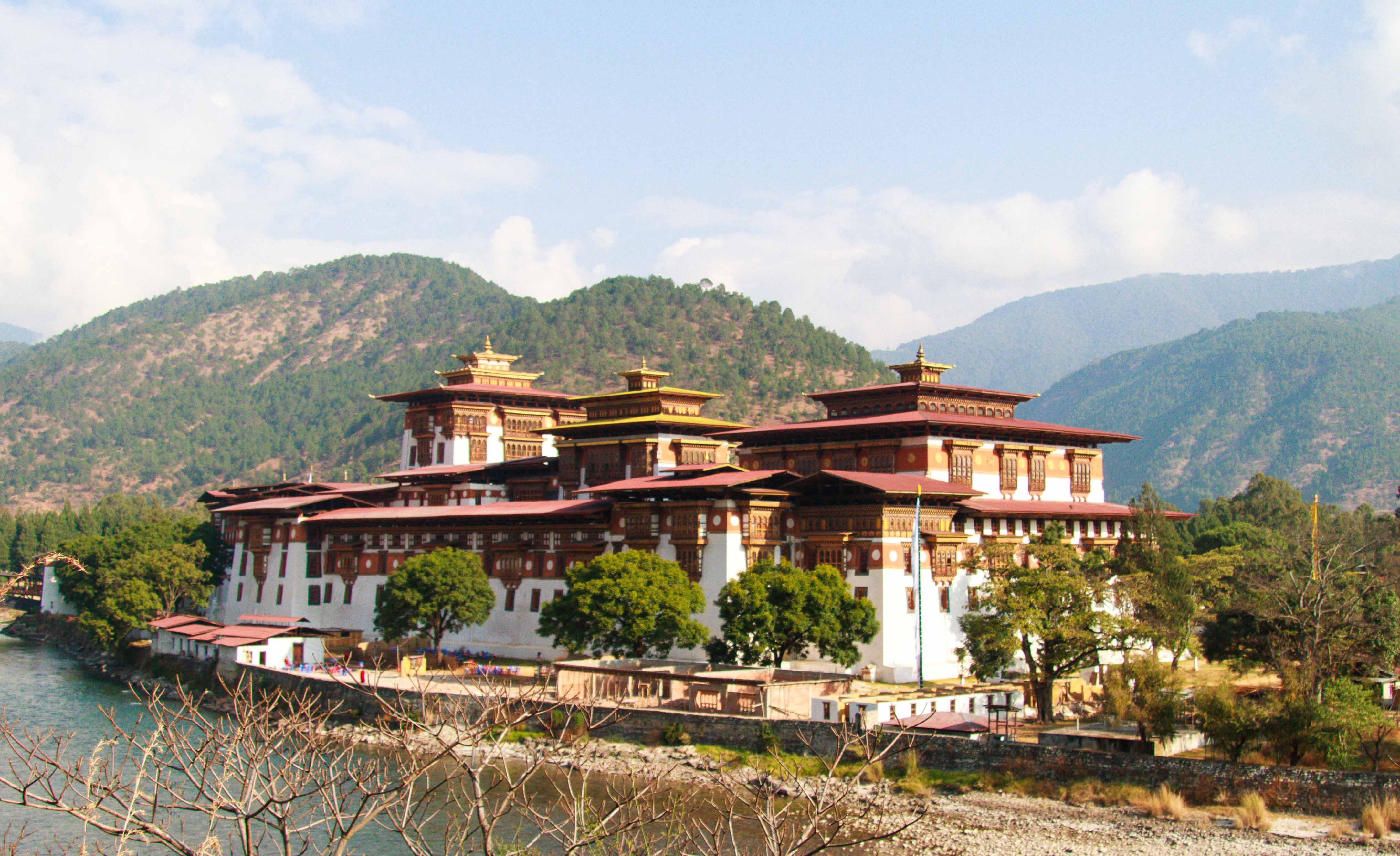
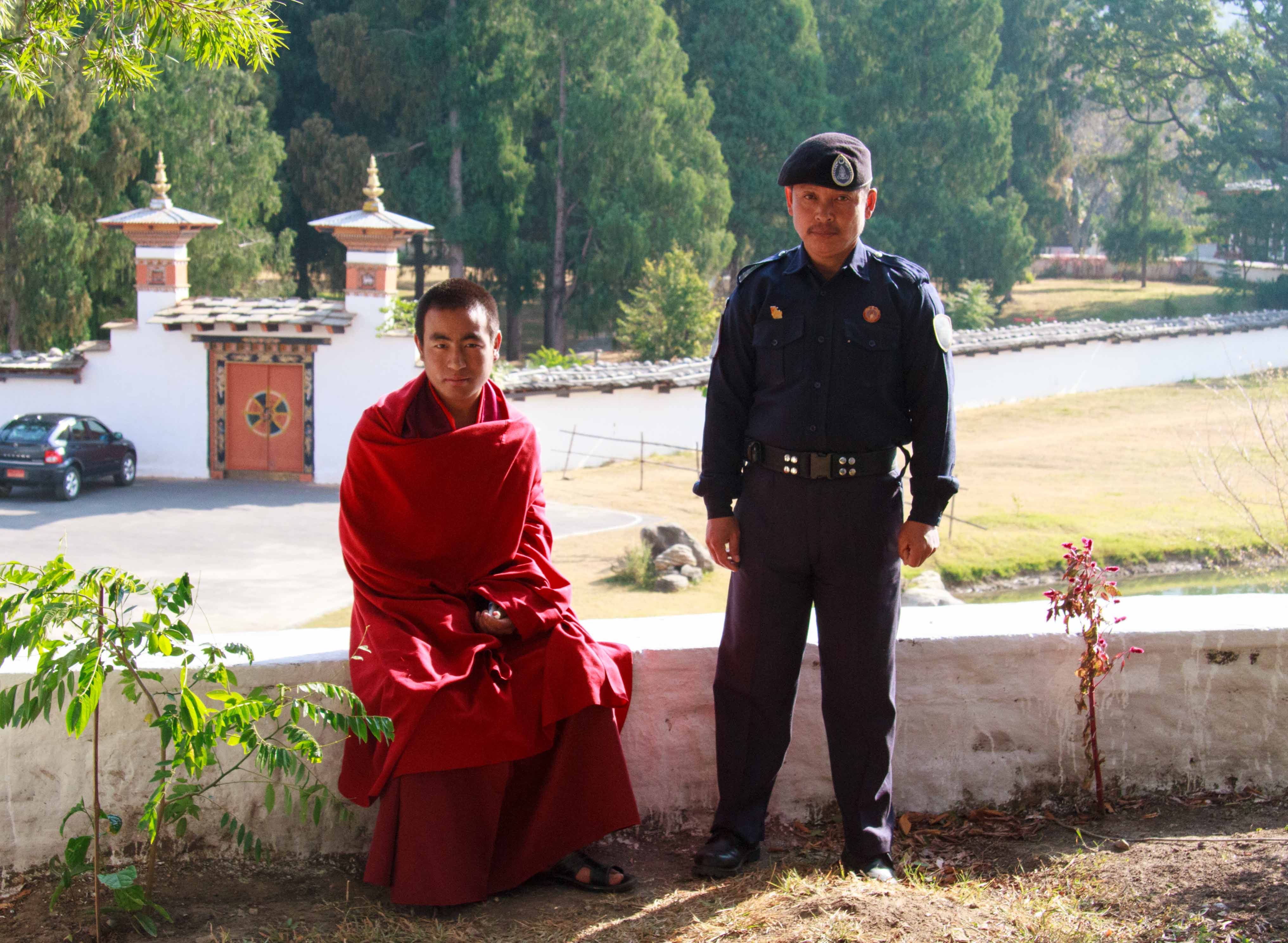
We were told that in Bhutan fortresses are always part monastery. We saw this, for example, at the Punakha Dzong:
Bhutanese countryside
We spent several days in the Bhutanese countryside, spending a lot of time on very rough roads in a small car (with cool American bumper stickers). If we had it to do over again, we’d either take more time or cover less 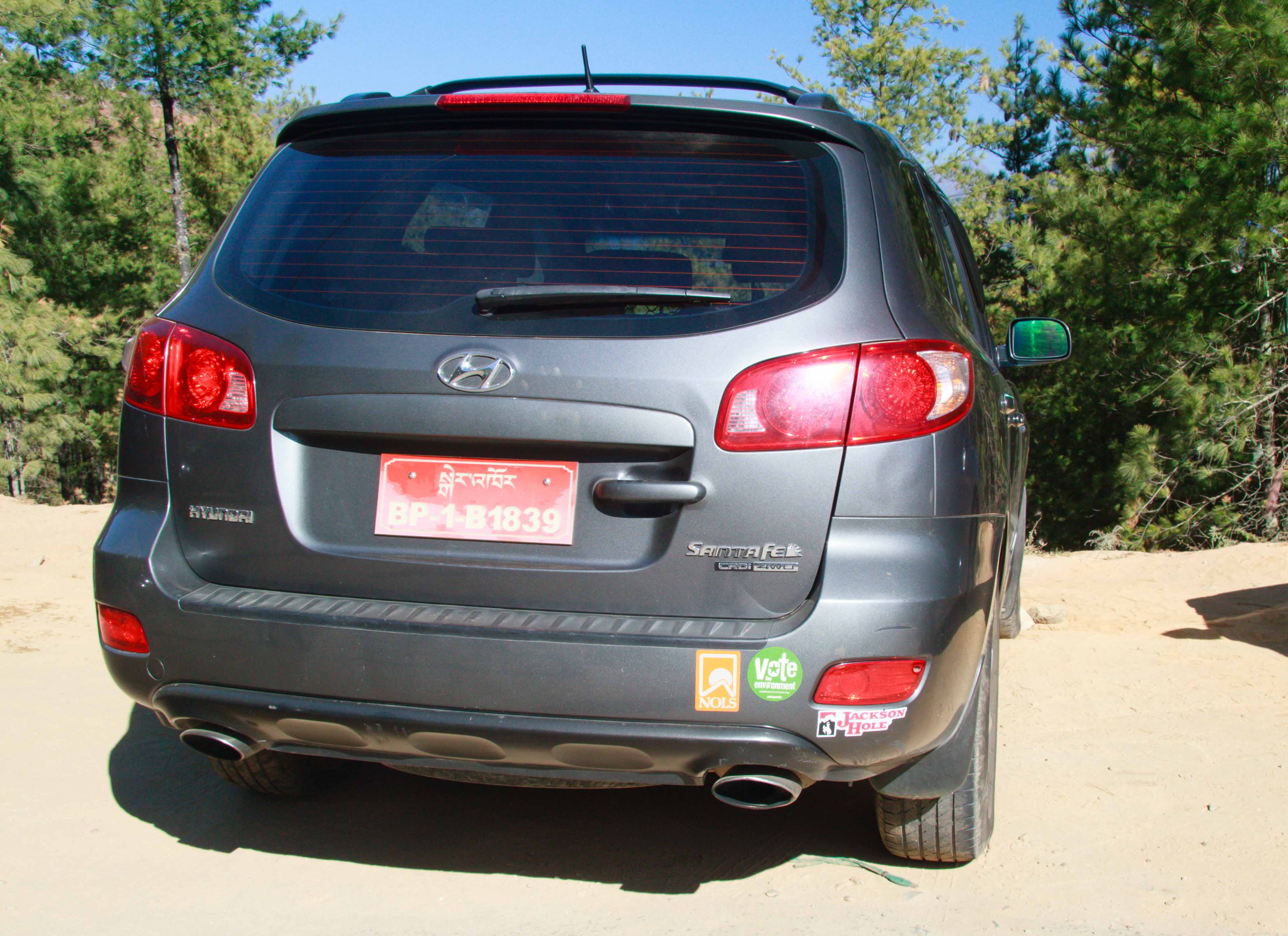 ground. That said, we saw a lot of great things!
The road trip part of our visit started on a bizarre note at Chimi Lhakhang, the monastery of Drukpa Kunley, the “Divine Madman”. He earned his title by teaching Buddhism through outrageous behavior. I won’t tell you which part of his body was dubbed the “Thunderbolt of Flaming Wisdom”, but he was supposed to be able to turn demonesses into protective spirits by smacking them with it. (If you need further hints, check out the photo of “Phallus Handicraft” in the gallery.)
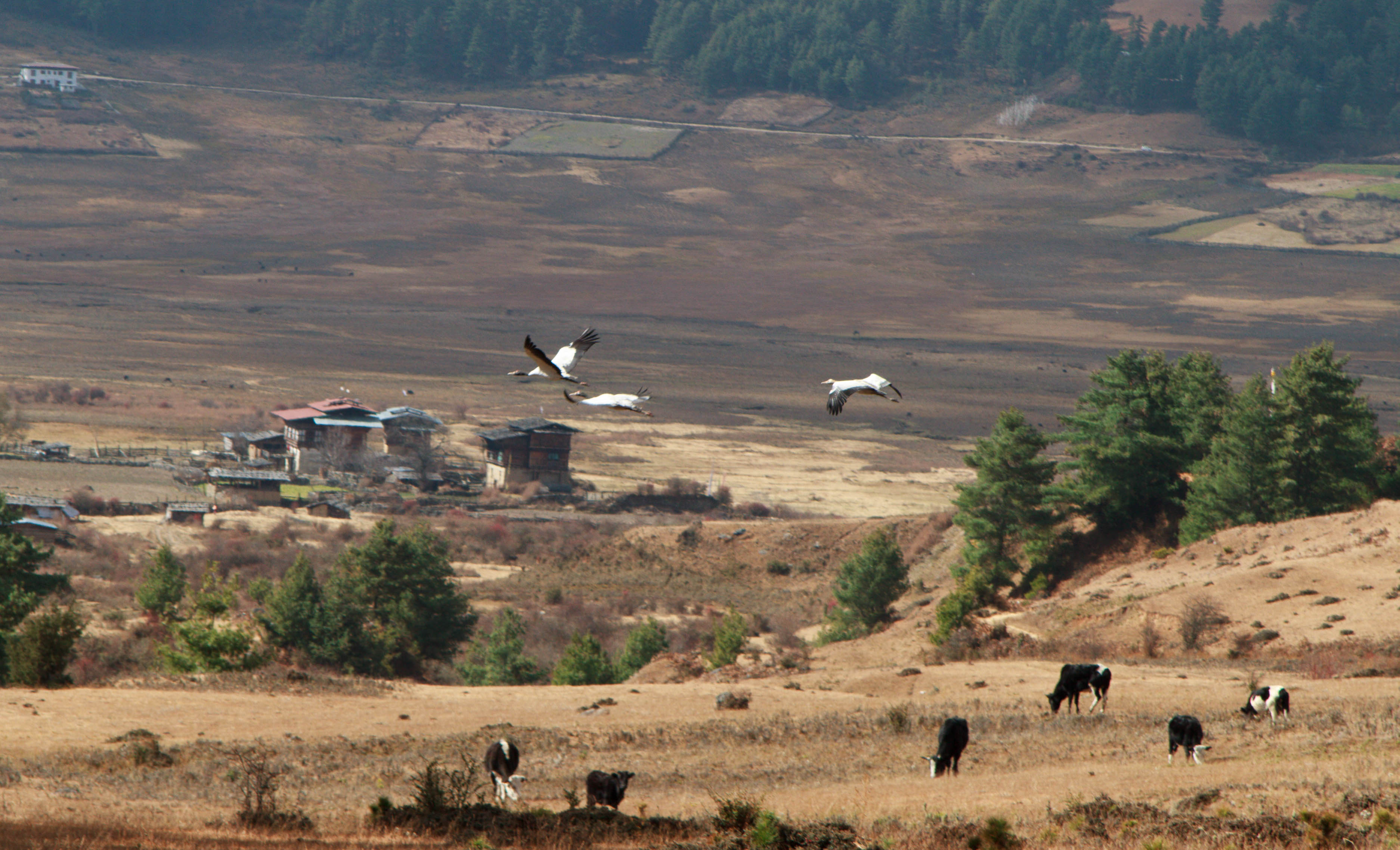
Moving east, we crossed the Black Mountains and traveled down into the Phobjikha Valley, a huge, high, wet glacial valley. It’s very sparsely populated, beautiful and tranquil. We stayed at the lovely Dewachen Hotel, and in the morning walked the Valley up to the Gangtey Monastery. Along the way we saw the black-necked cranes – we were lucky enough to be there at the right time for their winter vacation from Tibet – and stopped to chat with a nomadic shepherd. We were quite interesting; fortunately our guide was well-informed and able to explain us at length.
Arts and crafts
Bhutanese artifacts such as buildings, clothing, and towns have a vibrant, striking look due to the system of arts and crafts prevalent in the country.
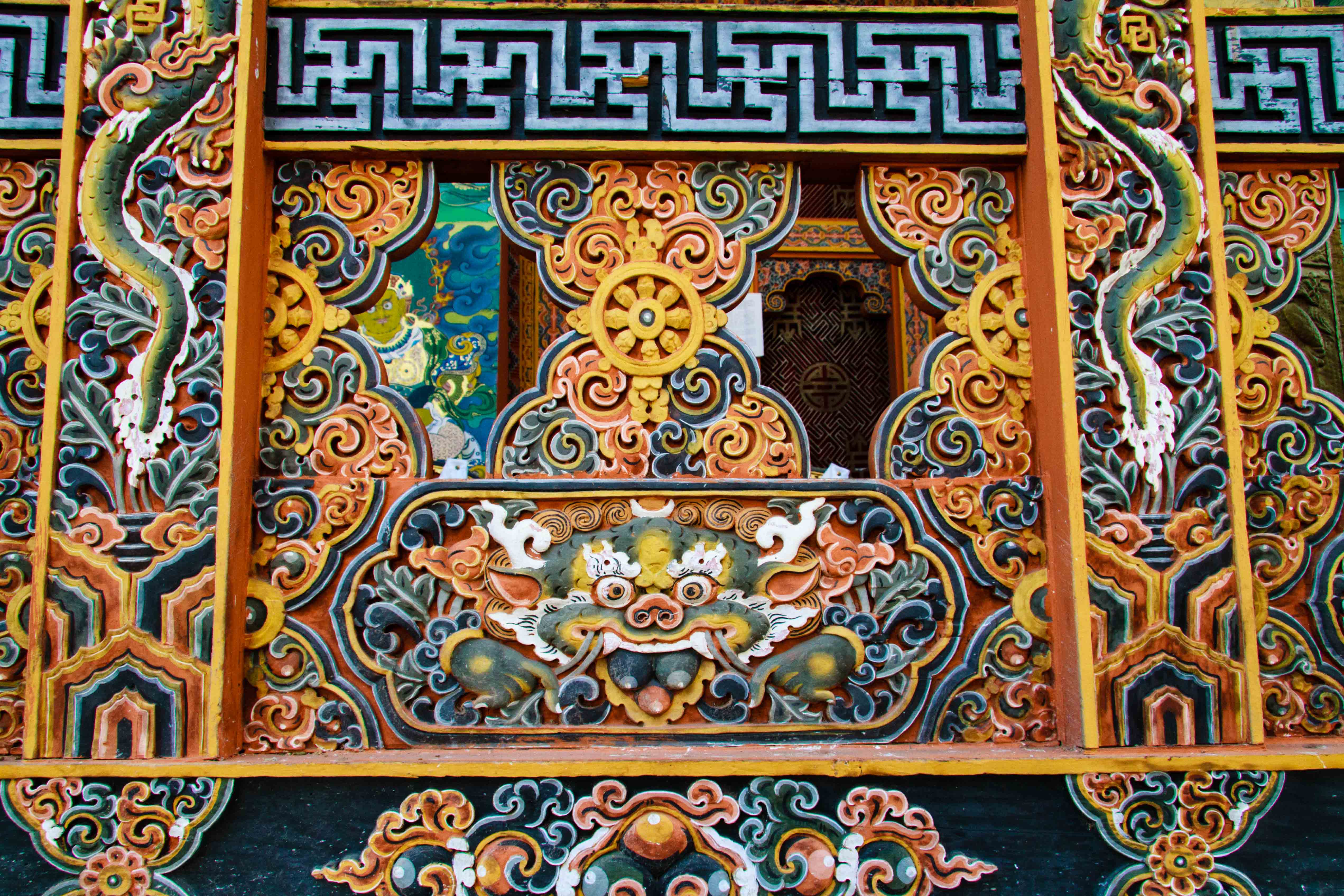
As with other aspects of Bhutanese life, the arts and crafts occur in an environment of more constraint than we’re used to, or really even comfortable thinking about, and yet… the result is impressive and satisfying. Within the constraints Bhutanese artists manifest tremendous creative energy.
There are thirteen traditional Zorig Chusum, which are in general very specific forms of familiar arts such as weaving, tailoring, painting, woodcarving, and pottery. The link just given points to a Bhutanese Tourism Council site that provides photos and descriptions of all thirteen arts and crafts.
Paro and Paro Taktsang
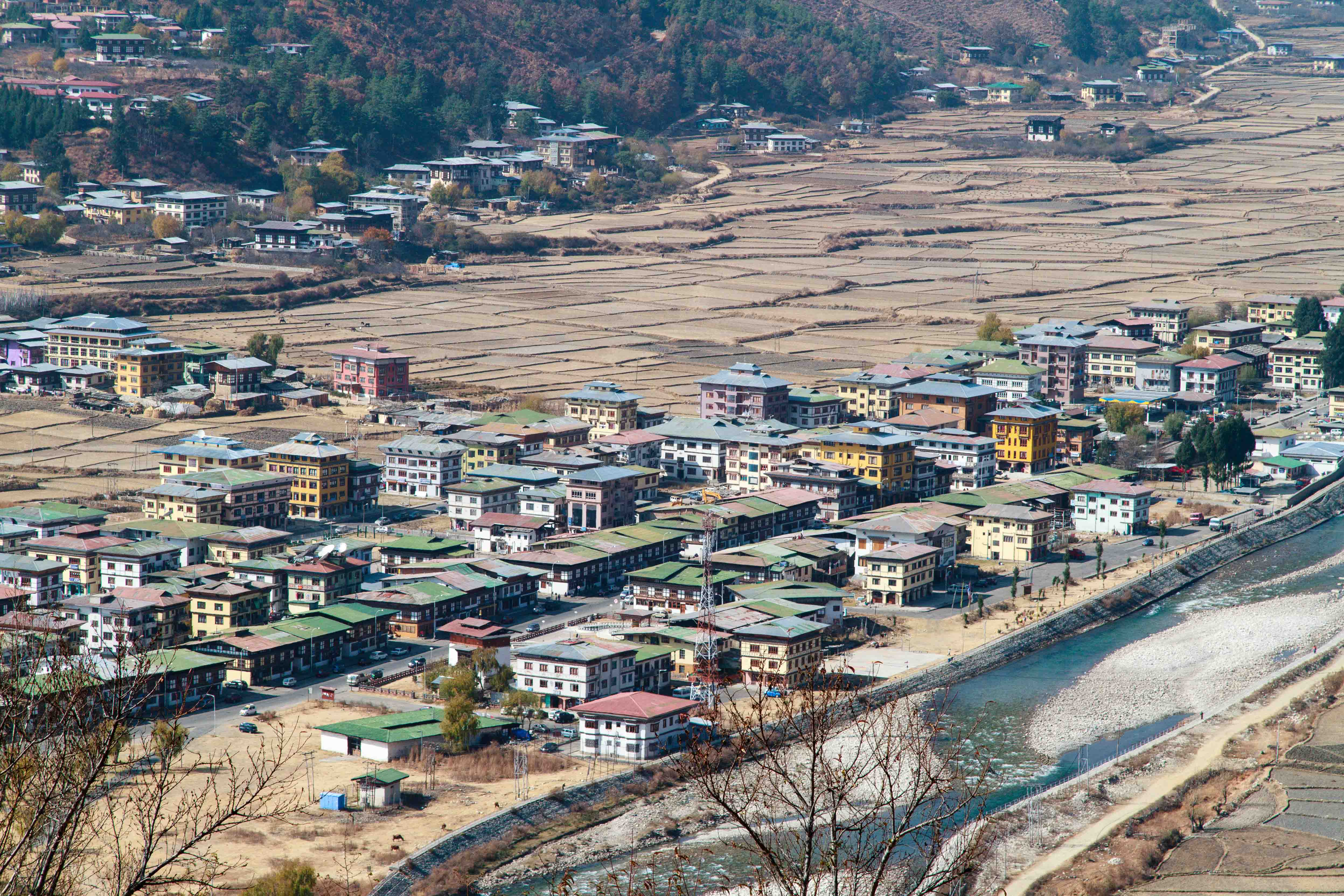
We wrapped up this leg of our trip in the lovely town of Paro, including a visit to the country’s most iconic, postcard-perfect site: Paro Taktsang, the Tiger’s Nest Monastery.
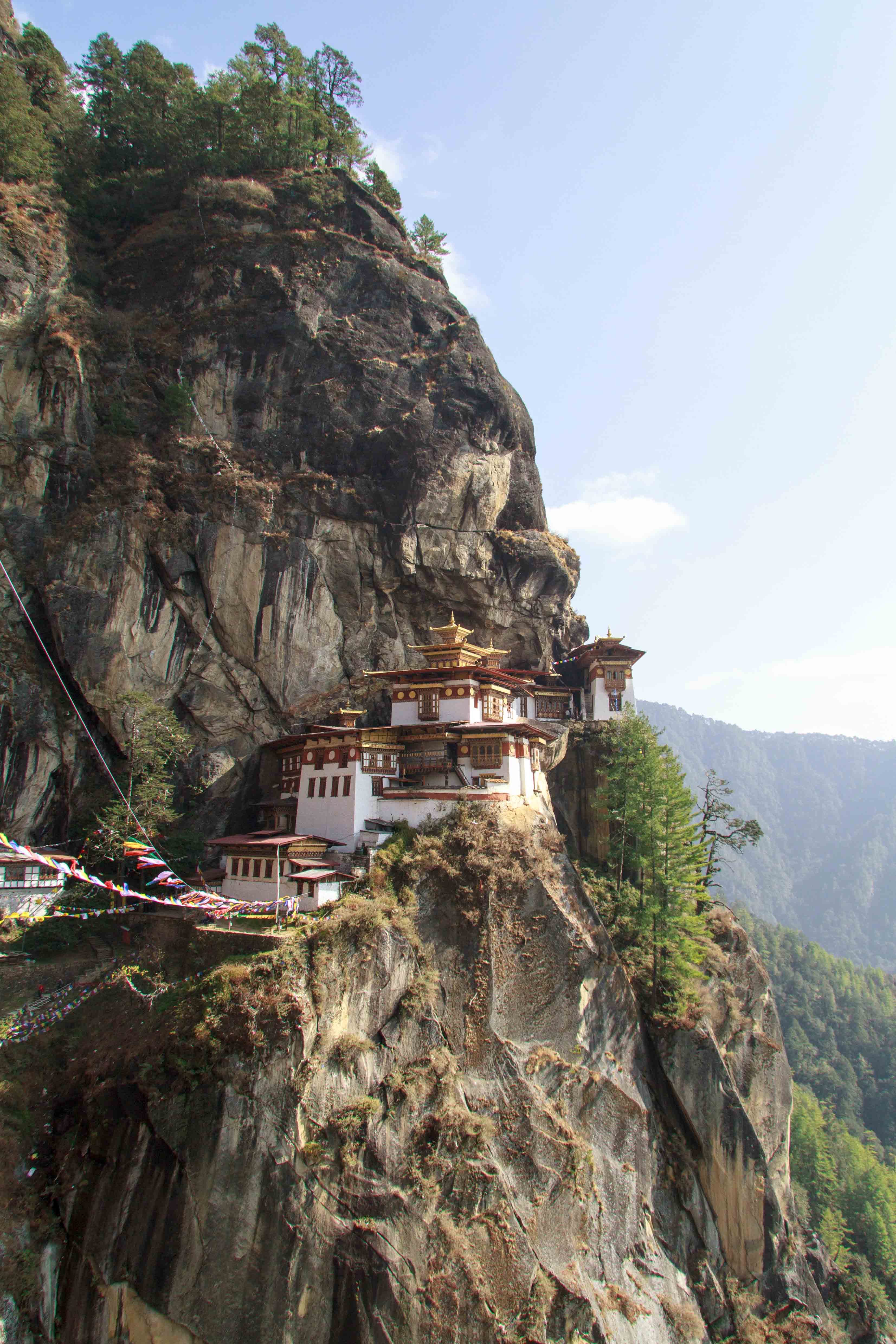
Climbing to the monastery was a beautiful way to finish our time in Bhutan.
More photos…
The full set of photos for our Bhutan visit is here: 2012 Asia part 3 – Bhutan.

 Mike and Robin's Photos